How to Verify LED Factory Capacity and QC Protocols
Verify led factory qc and production capacity by reviewing certification records, visiting assembly lines, testing sample batches, and confirming staff ratios before placing large LED display orders.
- Verify factory capacity by matching production records to your order size and checking shift schedules.
- Audit QC processes by observing actual testing steps, not just reading marketing materials.
- Use sample orders and third-party inspection reports to confirm quality before committing to volume.
- Confirm that factory staff and QC engineers have hands-on experience with your display technology.
- Build a verification checklist to compare multiple suppliers using consistent criteria.
Why Verifying Factory Capacity Matters Before Large Orders
Placing a large LED display order requires confidence that the supplier can deliver on time and at the expected standard. Many buyers rely on website claims or sample photos, but these do not reveal whether a factory can handle your specific volume and technical requirements. Production scale and quality control operate as interconnected systems. A factory with high output may cut corners on testing, while a small workshop may deliver perfect units but miss delivery dates.
The first step in supplier evaluation is understanding what “capacity” actually means in an LED display context. It is not just the number of panels produced per month. It includes the number of assembly stations, the availability of skilled technicians, the testing equipment required for your display type, and the ability to maintain consistent output across multiple production shifts. A factory that manufactures 50,000 panels annually may run two shifts with limited staff. A factory that claims 200,000 panels annually may have automated lines but lack the manual inspection time needed for your quality standards.
Before you commit to a large order, you need evidence that the supplier can meet your volume without degrading quality. This means looking beyond marketing materials and verifying the physical and procedural systems that support production.
How to Assess Production Scale and Shift Capabilities
Start by asking for the factory’s production records for the last three to four quarters. Look for monthly output figures broken down by display type, size, and pixel pitch. A supplier who cannot provide these records may lack the internal tracking systems needed for consistent large orders.
Request the shift schedule for the production line that handles your specific product. Many factories run single shifts for complex displays like video wall panels or high-resolution micro-LED products, while standard commercial displays may run two or three shifts. The number of shifts directly affects lead times. A factory running three shifts can produce roughly three times the output of a single-shift operation, but only if staffing and equipment support it.
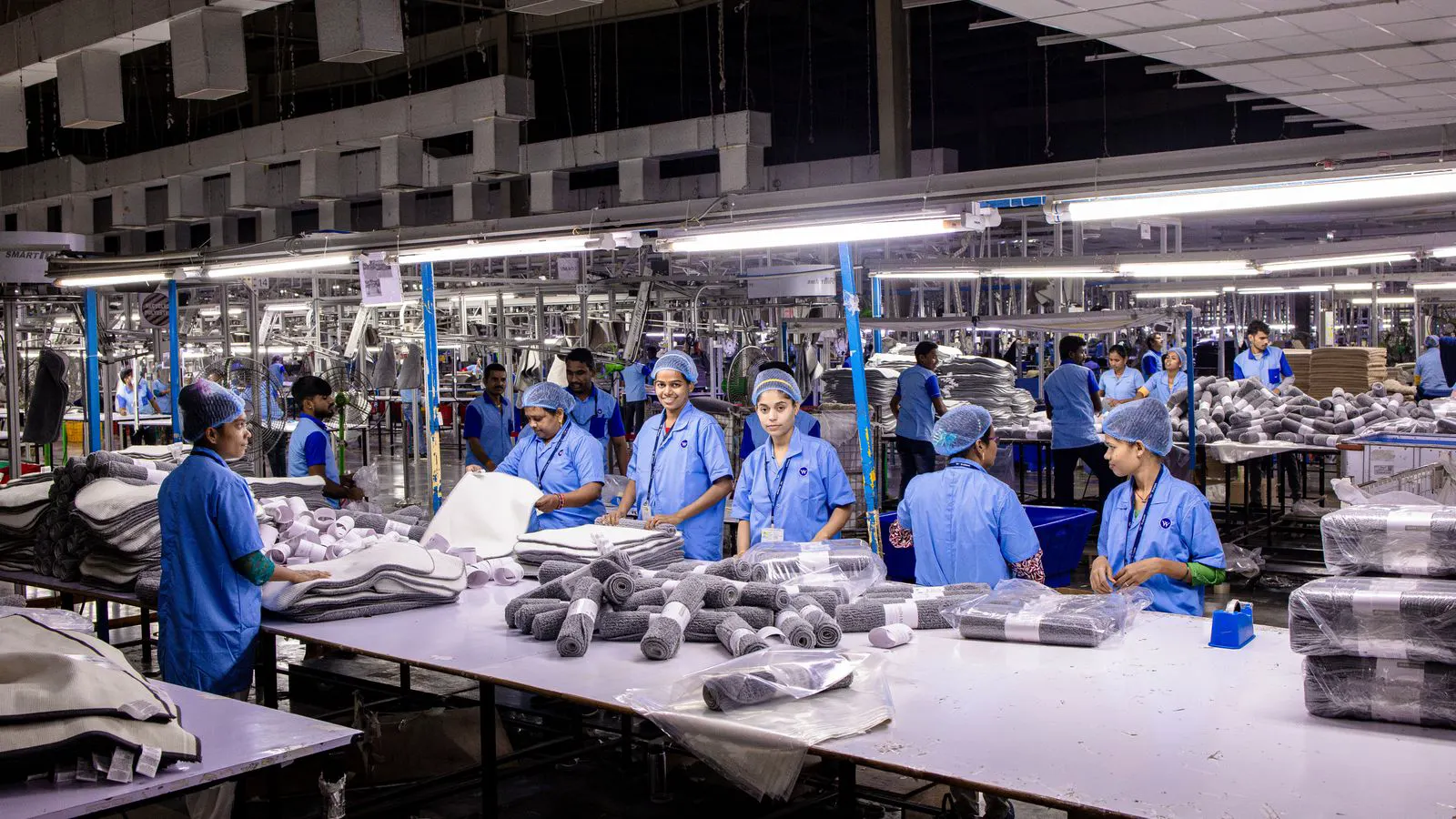
Visit the factory if possible, or request a live video walk-through. Walk the assembly line from the point where LED modules are produced to the final panel assembly. Count the number of assembly stations. Look for the number of technicians working at each station. Observe whether the line runs continuously or pauses frequently. A line that pauses due to material shortages or equipment failures will not maintain the capacity claimed.
Check the factory’s raw material inventory. Ask whether the supplier keeps stock of LED drivers, power supplies, PCB boards, and pixel chips. A factory that depends on just-in-time delivery for critical components is more vulnerable to delays. A supplier with buffer stock can absorb minor disruptions and keep production running.
What to Look For in QC Protocols and Testing Stations
Quality control in LED display manufacturing is not a single step. It is a sequence of checks at multiple stages of production. Each stage requires specific equipment and trained personnel. Understanding these stages helps you evaluate whether a factory’s QC processes match your requirements.
At the module level, factories should perform electrical testing to check for dead pixels, color uniformity, and voltage stability. Look for automated optical inspection systems or manual test benches. Manual testing is acceptable for some product lines, but it requires trained operators and consistent lighting conditions. Ask whether the factory uses statistical process control to track defect rates over time. If they do, request access to the trend charts.
At the panel level, QC includes brightness testing, contrast measurement, color temperature calibration, and mechanical stress checks. For video walls, additional checks cover seam uniformity and alignment accuracy. For outdoor displays, testing includes waterproofing verification, thermal performance, and electrical safety. A factory that only performs a single final visual inspection is not following industry-standard QC practices.
Ask for the factory’s defect rate records for your product category. A reasonable defect rate for large-scale LED display production is typically low, but the exact acceptable threshold depends on your application. A factory that cannot provide defect rate data may not be tracking quality closely enough. Request the test reports for a recent batch of panels similar to your order. Look for detailed measurements, not just pass or fail statements.
How to Conduct a Led Supplier Audit
A formal or informal led supplier audit is one of the most effective ways to verify a supplier’s capabilities. You can conduct this yourself or hire a third-party inspection firm. Third-party audits are especially useful for large orders or when you are working with a new supplier.
The audit should cover three main areas: production capacity, quality control systems, and supply chain management. For production capacity, verify the number of assembly lines, the number of workers per line, and the number of shifts. For QC, observe the testing stations, check the calibration records for test equipment, and review the training records for QC staff. For supply chain management, confirm the origin of critical components and the backup suppliers for any single-source materials.
During the audit, ask the factory to walk you through a recent production cycle. This gives you a clearer picture of how the factory operates under normal conditions. Observe whether the workers follow documented procedures or rely on habit. Documented procedures are a sign of a mature quality management system.
Request to see the factory’s quality control documentation, including inspection checklists, non-conformance reports, and corrective action records. A factory that actively tracks and resolves quality issues is more reliable than one that simply rejects defective units and moves on. Look for evidence of continuous improvement, such as updated test procedures or revised assembly steps after quality incidents.
If you cannot visit the factory, request a detailed video audit. Ask the supplier to show you the production line, the QC stations, and the storage area. Record the video for your records. A transparent supplier will welcome this request. A supplier who hesitates or offers vague explanations may have issues worth investigating.
How to Verify Led Manufacturing Capacity with Sample Orders
Sample orders are a practical way to test a supplier’s capacity and QC processes before placing a large order. Request a sample batch that matches your production specifications exactly. Do not accept a modified version or a “close enough” alternative. The sample should be produced on the same line, with the same materials, and through the same QC process as your full order.
Evaluate the sample on multiple dimensions. Check the physical appearance for surface defects, color uniformity, and panel alignment. Test the electrical performance for brightness, color accuracy, and signal integrity. Review the packaging for protection during transport. A factory that cannot produce a sample to your exact specifications is unlikely to produce a large order to your standard.
Use the sample order to assess lead time. Request a delivery estimate and track the actual delivery date. Compare the two. A supplier who misses the sample delivery date may struggle with larger orders. A supplier who delivers early or on time may have better production planning and supply chain management.
After receiving the sample, request a detailed QC report. Look for test data, defect rates, and any notes about minor issues. A good supplier will provide this report without being asked. They will also be willing to discuss any improvements they made during the sample production. This communication is a sign of a professional and reliable partner.
Criteria Table for Evaluating LED Suppliers
Use the following criteria table to compare multiple suppliers on a consistent basis. Fill in the details for each supplier you are considering. This makes it easier to identify the supplier with the strongest combination of production capacity and QC capability.
| Criterion | What to look for | Why it matters |
|---|---|---|
| Production capacity records | Monthly output by product type and shift schedule | Confirms the factory can meet your order volume without overloading the line |
| QC equipment and calibration | Automated test stations, calibration records, test reports | Ensures consistent testing and reliable measurement of panel performance |
| Defect rate tracking | Historical defect rates and corrective action records | Indicates whether the factory actively manages quality and learns from issues |
| Raw material inventory | Stock levels for LED drivers, PCBs, power supplies, and pixel chips | Reduces the risk of delays caused by component shortages |
| Staffing and training | Number of technicians per line and training records for QC staff | Affects both production speed and the consistency of quality control checks |
| Sample order performance | Delivery time, specification match, and QC report quality | Provides real-world evidence of the factory’s ability to meet your requirements |
Decision Checklist Before Placing a Large Order
Before committing to a large LED display order, confirm that you have verified each of the following items. This checklist ensures that you are making a decision based on evidence rather than assumptions.
- You have reviewed the factory’s production records for the last three to four quarters and confirmed that their output matches your order size.
- You have visited the factory or completed a detailed video audit of the production line and QC stations.
- You have observed the QC process in action and confirmed that testing is performed at multiple stages of production.
- You have received defect rate records and test reports for a recent batch of panels similar to your order.
- You have completed a sample order that matches your production specifications exactly and evaluated it against your quality standards.
- You have confirmed the factory’s raw material inventory and backup suppliers for critical components.
- You have reviewed the factory’s quality documentation, including inspection checklists and corrective action records.
- You have compared at least two suppliers using the criteria table and identified the one with the strongest combination of capacity and QC capability.
A large LED display order is a long-term commitment. The supplier you choose will handle your quality expectations, delivery timelines, and technical support for years. Verifying factory capacity and QC protocols before placing the order reduces the risk of delays, defects, and costly rework. Take the time to build a clear evidence base. The supplier that can demonstrate consistent production and reliable quality control is the one most likely to meet your long-term needs.
Frequently asked questions
How much lead time should I expect for a large LED display order?
Lead times vary by product type, order size, and factory capacity. Standard commercial displays may take several weeks, while complex video walls or high-resolution products may take longer. Confirm the lead time in writing before placing the order.
Do I need to hire a third-party inspection firm for a new supplier?
For large orders or new suppliers, yes. A third-party inspection firm provides an independent assessment of production capacity and QC processes. It reduces the risk of hidden quality issues and gives you an objective basis for your decision.
What is the minimum sample order size I should request?
The sample size should be large enough to test the QC process and production consistency. A small number of panels, such as a single unit, may not reveal defects that appear in larger batches. Request a sample that matches your production specifications exactly.
Can I trust a supplier's website claims about their production capacity?
No. Website claims should be verified with production records, a factory visit, or a third-party audit. Claims without supporting evidence are not reliable indicators of actual production scale.
What documents should I ask for during a factory audit?
Request production records, QC test reports, defect rate data, calibration records for test equipment, and training records for QC staff. These documents provide evidence of the factory's quality management system and production capabilities.